

A job offer repayment clause requires you to return money, such as a sign-on bonus, relocation payment, training fee or visa cost, if you leave before a set date. Whether an employer can actually collect depends on where you work, what the money was for, and how the clause is drafted. Several jurisdictions changed their rules in 2025 and 2026, so older advice online is often out of date. This article covers the United States, the United Kingdom and Germany, adds a section for sponsored visa workers, and lists what to check before you sign.
What a Repayment Clause Looks Like in an Offer
These provisions go by several names: stay-or-pay, training repayment agreement provision (TRAP), clawback, or a “career development loan.” They usually cover sign-on bonuses, relocation costs, course or certification fees, tuition, and immigration expenses. Bloomberg Law reports that the required stay is often two or three years.
The clause may sit in the offer letter, the main contract, or a separate document, and that placement can matter legally. Repaying a bonus you were actually paid is also different from repaying an employer’s internal estimate of your training cost. Disputes cluster around the second kind. In a 2026 English case, the employer’s £8,108 figure included mentoring and study time, against a salary of £18,000. An estimate like that is harder to defend than a course provider’s invoice.
United States: The Rules Depend on the State
There is no federal ban. Bloomberg Law reports that federal agencies have largely stepped back from regulating these agreements, and the FTC dropped its defence of its noncompete rule, which would have reached some repayment clauses. State law now does most of the work.
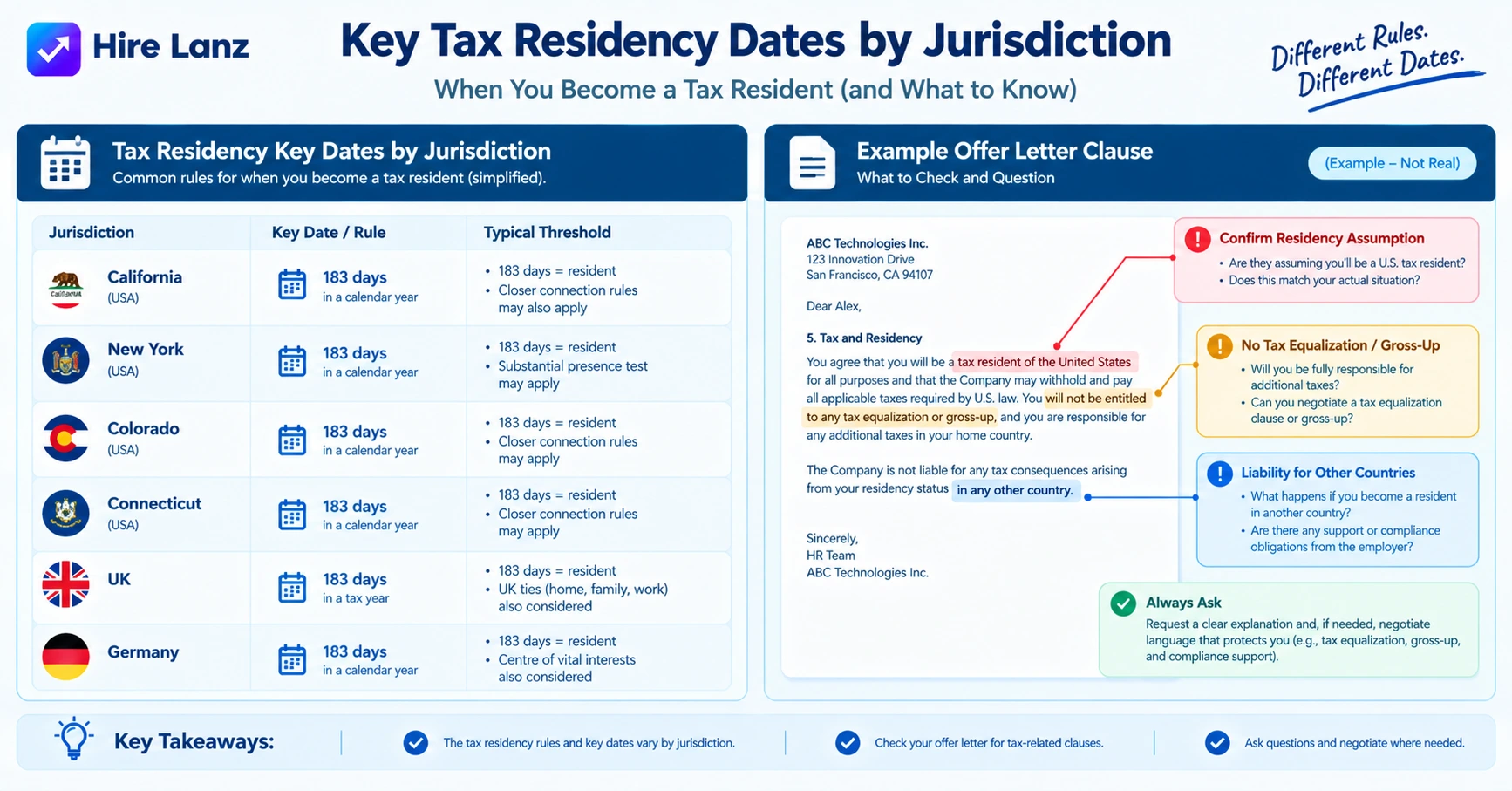
| Jurisdiction | Current Position | Date to Note |
|---|---|---|
| California | Most repayment-on-departure terms in new contracts are void and unlawful | Contracts entered on or after 1 January 2026 |
| New York | Trapped at Work Act bars requiring a repayment “promissory note” as a condition of employment | Effective date moved to 19 December 2026 |
| Colorado | Only costs distinct from ordinary on-the-job training, limited to reasonable costs that shrink over time | In force since 7 August 2024 |
| Connecticut | Existing restrictions extended to employers of all sizes | Scheduled for 1 October 2026 |
California’s AB 692 has exceptions for government loan programs, certain tuition arrangements tied to a transferable credential, approved apprenticeships, and some retention bonuses. Law firm summaries say these come with conditions, such as a separate agreement and prorated rather than accelerated repayment. The law is not retroactive, so clauses signed before 2026 are not automatically void under it, although some California lawyers argue older labor and competition statutes can still defeat them.
New York needs a closer look. The governor signed the Trapped at Work Act on 19 December 2025, then signed a chapter amendment on 13 February 2026 that delayed the operative date and narrowed coverage to employees. Law firm commentary notes the wording could point to either 19 December 2026 or 13 February 2027, and that it does not say whether older agreements are grandfathered. The labor commissioner enforces the Act, and commentary indicates workers have no direct right to sue under it.
Enforcement is real: Bloomberg Law reports a hospital chain paid $2.9 million to settle claims by three state attorneys general over repayment contracts imposed on nurses.
Sponsored Workers: Visa Costs and Early Departure
United States (H-1B). The Department of Labor’s H-1B Advisor says employers may not seek or collect a penalty for leaving before the end of a contract, even if the worker agreed to it. Signs of a penalty include a fixed payment regardless of time served and an amount not tied to any real cost. Reasonable liquidated damages, meaning a fair estimate of the employer’s actual loss, are allowed, and state law decides which side of the line a clause falls on. An employer also cannot deduct anything that pulls your pay below the required wage.
United Kingdom (Skilled Worker and related routes). Home Office sponsor guidance says the Immigration Skills Charge cannot be passed to the worker. For a Skilled Worker, the same applies to the Certificate of Sponsorship fee (for certificates assigned on or after 31 December 2024) and to the sponsor licence fee and related administrative costs. The Home Office will normally revoke a licence if a sponsor recoups, or tries to recoup, these costs. Your own visa application fee and Immigration Health Surcharge can still be covered by a repayment arrangement.
United Kingdom: Geeks Ltd v Watts
In Geeks Ltd v Watts [2026] EWCA Civ 889, decided in July 2026, Mr Watts joined an IT company as a trainee quality assurance engineer on £18,000. He signed an agreement to repay £8,108 of training and support costs if his employment ended for any reason other than redundancy. He resigned after eight months for a better-paid job. The County Court sided with the employer; the Court of Appeal reversed, holding the clause an unreasonable restraint of trade.
The court accepted that an employer can have a legitimate interest in keeping a trained workforce. The problem was scope: the clause applied whatever the reason for leaving and whether or not he moved into the same industry. The court also indicated that a clause requiring repayment of salary, in whole or part, is likely to need a reasonableness assessment, using a full year’s gross salary as its example.
This does not make every UK training clause unenforceable. Law firm commentary says a clear link to genuine cost, a modest amount and repayment that falls over time all help.
Germany: Repayment Clauses as Standard Terms
German courts review employer-drafted repayment clauses as standard contract terms. In a judgment of 1 March 2022 (9 AZR 260/21), the Federal Labour Court (BAG) held that a training-cost clause requiring repayment after any resignation, whatever the reason, unreasonably disadvantaged the employee. The clause failed entirely rather than being trimmed to something acceptable.
As German legal publishers summarise the case law, a clause is balanced only if the employee can avoid repaying by staying, the binding period fits the length and value of the training, and the amount declines in steps over time.
What to Check Before You Sign
- What triggers repayment. Resignation only, or also dismissal, redundancy, illness, or a resignation caused by the employer’s conduct? Clauses that apply in every case are the ones UK and German courts have struck down.
- Whether the amount shrinks. A fixed figure for the whole term is weaker than one that falls month by month.
- What the money covers. Ask for a cost breakdown. Internal estimates and general “support costs” deserve questions.
- Visa items. If you are sponsored, confirm the clause excludes the sponsor-side fees listed above.
- Deductions from pay. Check whether the employer may take repayment from your final salary, since wage-protection rules may restrict this.
Hypothetical Example: A Relocation and Visa Clause
This scenario is invented, not a real case. A software engineer is offered a job in London on a Skilled Worker visa. The offer says she must repay £6,000 described as “relocation, visa and sponsorship costs” if she resigns within 24 months.
She asks for a breakdown. If it includes the Certificate of Sponsorship fee or the Immigration Skills Charge, those items should come out, because the sponsor may not recoup them. Her own visa fee and Health Surcharge can lawfully be included. If part is “training,” she can ask what it paid for and whether the sum falls over time.
Conclusion
Treat a repayment clause as a financial commitment, not a formality. Ask what triggers it, what the figure covers and how it falls over time, and get the answers in writing before you accept. If the terms look broad or the amount is large relative to your salary, an employment lawyer or local worker-advice service can tell you whether the clause is likely to hold up where you will work.
Related Content: