

Published: 13 August 2026 · Last updated: 27 September 2026 · Last reviewed against official sources: 27 September 2026
Does the US have a digital nomad visa? No. As of August 2026, the United States offers no visa category built for remote workers who want to live in America while earning from a foreign employer or foreign clients. More than 50 countries now run programs like this. America is not one of them. That does not end your plans. It means you need to know what visitor status really allows, where the legal line sits, and which routes remote workers use instead.
Does the US Have a Digital Nomad Visa? The Short Answer for 2026
There is no US digital nomad visa. Immigration attorneys, the Department of State and USCIS all describe the same gap. No category exists for someone who wants to live in America purely on foreign online income.
The reason is mostly age. The Immigration and Nationality Act dates to 1952. As one Georgetown Immigration Law Journal analysis noted, the closest thing to email back then was the telegraph. Congress never pictured a person sitting in Denver while their salary arrives from Berlin.
The rest of the world moved faster. Spain, Portugal, Croatia, Japan and the UAE all launched remote work permits after 2020. Governments realised they could import foreign salaries without adding competition for local jobs. Active programs passed 50 in early 2026.
So what does “no visa” mean in practice? You can still visit America. You just cannot treat a visit as a substitute for residence, and your laptop does not travel under different rules than you do.
What US Law Says About Working Remotely on American Soil
Here is the key idea. US immigration analysis focuses on where your body is when the work happens, not where your employer is registered or which currency pays you.
Department of State guidance lists employment as an activity that cannot be performed on a visitor visa. The B-1 category is explicitly not appropriate for someone intending to work. Attending a conference is fine. Logging in daily is not.
USCIS defines unauthorized employment as services performed for an employer inside the United States by someone lacking authorization. Read that slowly. It says nothing about who signs your paycheque.
No agency publishes a safe number of hours. Officers weigh the real purpose of your trip, its length and your daily activity. One urgent call during a holiday sits far from a Monday to Friday schedule in a rented flat.
What usually falls outside the safe zone:
- Keeping regular working hours for a foreign employer while in the US
- Freelancing for American clients without work authorization
- Actively managing a US business you own
- Any paid activity you would put on a timesheet
Can You Work Remotely in the US on a Tourist Visa or ESTA?
Most travellers arrive on one of two documents. The B-1/B-2 visa is usually issued as a combined stamp. Stays run up to six months per entry, but the exact date is set by a border officer on arrival, not by the visa.
The second route is the Visa Waiver Program. Passport holders from roughly 42 countries can travel for up to 90 days on ESTA instead of a visa. The fee doubled from $21 to $40 on 30 September 2025. Waiver travellers face the same restrictions as B visitors, with no extension.
Now the myth. Many remote workers believe foreign payment puts them outside American jurisdiction. It does not. Sitting on US soil doing productive work is what counts, and calling the trip a holiday does not help.
Admission is also discretionary. Customs and Border Protection officers can question your purpose and inspect devices. A calendar full of client calls can cost you entry on the spot.
The Real Risks of Doing Your Day Job From a US Rental
The first risk is simple. You get turned around at the airport. Denial of entry is not criminal, but it creates a record that follows every future application you file.
The second is delayed and worse. If USCIS later finds you worked without authorization, your visa can be voided and your stay reclassified. Time you believed was lawful becomes unlawful presence, which triggers multi year bars.
The third hurts careers. That finding sits in your file and can complicate a later H-1B petition, a sponsored green card or a family application. A small risk today can block a legitimate plan a decade later.
The 2026 environment raises the stakes. The One Big Beautiful Bill Act, signed on 4 July 2025, created a $250 Visa Integrity Fee on visa issuance, though consular rollout has been uneven. A visitor bond pilot also ran through the 2026 travel season.
Four risks worth writing down before you book:
- Entry denial. An officer can refuse admission on suspected work intent alone.
- Visa revocation. Your stamp can be cancelled and the stay reclassified.
- Unlawful presence bars. These can lock you out for three or ten years.
- Damaged future applications. One finding follows every category.
Legal US Visa Routes Remote Workers and Freelancers Actually Use
The O-1A visa is the closest thing to a self directed option. It covers extraordinary ability in business, science, education or athletics, shown through awards, press, high pay or original contributions. It still needs a petitioner, though agents can file.
The E-2 treaty investor visa suits people who want to run something. You must be a national of one of the 80 plus treaty countries, invest substantially in a real operating business, place the funds at risk, and come to direct it. Passive holdings do not qualify.
Employer sponsored routes remain the main path. H-1B covers specialty occupations and is capped and lottery based. L-1 moves executives and specialised staff from a foreign office to a US branch. Both need a company willing to file, so neither fits a freelancer.
Then the newest wrinkle. Alongside the $1 million Trump Gold Card launched in December 2025, the government has promoted a waitlist for a proposed $5 million Trump Platinum Card offering up to 270 days a year without tax on non US income. It needs congressional approval, and only one Gold Card approval was public by April 2026.
| Route | Best For | Sponsor Needed? | Realistic Timeline |
|---|---|---|---|
| B-1/B-2 | Short visits and business meetings | No | Weeks to months |
| ESTA | Trips under 90 days for eligible Visa Waiver Program travelers | No | Days |
| O-1A | Proven top performers with extraordinary ability | Yes | 3–9 months |
| E-2 | Treaty nationals starting or investing in a US business | No — investment is required instead | 4–12 months |
| H-1B or L-1 | Employees of qualifying sponsoring firms | Yes | 6–18 months |
Taxes, Costs and the Checklist to Run Before You Book
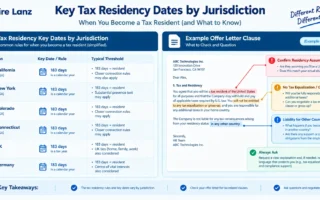
Immigration permission and tax status are separate systems, and confusing them causes real damage. The IRS applies the Substantial Presence Test: you become a US tax resident at 31 days this year plus 183 weighted days over three years.
Relief exists for people who genuinely live elsewhere. Under the closer connection exception you may still count as a nonresident if you spent under 183 days here this year and kept a tax home abroad. Claiming it means filing Form 8840.
Costs have climbed. The standard MRV fee is $185. Add the $250 integrity fee once collection is uniform and one applicant faces $435 before legal help. A family of four goes from roughly $740 to $1,740. Waiver travellers skip the integrity fee but pay $40 for ESTA.
One last trap. Nonresident tax status does not mean immigration overlooks your working days, and paying US tax creates no permission to work. Check both separately with a licensed immigration attorney and a cross border tax adviser.
Your pre booking checklist:
- Count your US days across three calendar years, not just this trip
- Check whether your passport qualifies for ESTA or needs a B visa
- Budget for the MRV fee, the integrity fee and legal costs
- Decide honestly whether your trip involves work
- Get advice before booking anything long
Summary
The United States has no digital nomad visa and shows no sign of building one. American law judges work by where you physically sit, so foreign payment protects nobody. Tourist visas and ESTA allow visits and meetings, not your regular job. Getting this wrong ranges from a refused entry to multi year bars. Legal alternatives exist, including O-1A, E-2, H-1B and L-1, but each needs a sponsor, an investment or an exceptional record.
Frequently Asked Questions
Does the US have a digital nomad visa in 2026?
No. There is no US digital nomad visa or remote work visa in 2026. American law has no category for people living here while working online for an overseas employer. Every legal route needs sponsorship, investment, family ties or a purpose other than paid work.
Can I work remotely on a B-1/B-2 tourist visa?
Generally no. Visitor status does not permit productive employment, even when your employer is abroad and your salary is paid overseas. Answering one urgent email on holiday differs from keeping normal working hours from a US apartment.
Does working for a foreign company make it legal?
It does not. US rules focus on where the work is physically performed, not where the payer sits. If you are on American soil doing your ordinary job, authorities may treat it as unauthorized employment.
Will I owe US tax if I stay a long time?
Possibly. The Substantial Presence Test makes you a tax resident at 31 days this year plus 183 weighted days over three years. The closer connection exception may help if you kept a tax home abroad, but it requires Form 8840.
What is the Trump Platinum Card?
It is a proposed $5 million program allowing up to 270 days a year in the United States without tax on non US income. It sits on a government waitlist but still needs congressional approval, so treat it as unconfirmed.
Conclusion
Does the US have a digital nomad visa? The answer is a clean no, and hearing it now beats discovering it at a border desk. American law was written before remote work existed, and nobody has updated it to match how millions of people now earn a living. What you control is your response. Keep US trips short and genuinely recreational, or pursue a real route: O-1A if your record supports it, E-2 if you are a treaty national, or employer sponsorship if a company will back you. Count your days, and speak to a licensed immigration attorney before committing money or a notice period.
Related Articles: