
Published: 22 August 2026 · Last updated: 27 September 2026 · Last reviewed against official sources: 27 September 2026
Can I work remotely on a tourist visa? In most countries the honest answer is no, or at least not officially. A tourist visa is issued for holidays, family visits and sightseeing. Immigration law usually defines work as any activity done for gain or reward, no matter who pays you or which bank the money lands in. A few countries now allow it in writing, many quietly tolerate it, and some treat it as unauthorised employment with real penalties. Here is how to tell which situation you are in.
What “Work” Really Means on a Tourist Visa
Most people assume work means taking a local job. Immigration officers use a much wider definition. New Zealand’s rules, for example, describe work as any activity undertaken for gain or reward, and reward includes benefits with a money value such as free accommodation.
That definition is why the most popular defence of working remotely on a tourist visa fails. “My employer is in another country” sounds logical, but the law looks at where your body is, not where your payroll sits. If you are typing in Lisbon, the work is happening in Portugal.
Lawyers treat this as a spectrum, not a switch. Checking your inbox once on holiday is incidental, and nobody would call that employment. Working eight hours a day from a rented flat is something else entirely.
Between those extremes sits the question every border officer is really asking: what is the main reason you came? That primary purpose test decides most cases.
Can I Work Remotely on a Tourist Visa Legally? Three Groups of Countries
The first group has written the rules down and said yes. New Zealand is the clearest example. Every visitor visa applied for on or after 27 January 2025 permits unlimited remote work for an overseas employer or client. You still cannot work for a New Zealand business.
The United Kingdom sits in a narrower version of that group. Since 31 January 2024, visitor rules expressly allow you to carry out duties relating to your overseas employment from inside the UK, provided this is not the primary purpose of your trip and no payment comes from a UK source.
The second group is the grey zone, and it is by far the largest. Across most of the Schengen Area, Latin America and the Caucasus, remote work on a tourist visa is neither clearly permitted nor actively policed. Short stays are widely tolerated, but tolerance is not permission.
The third group says no and means it. The United States has no digital nomad route, and the State Department is explicit that visitor status does not authorise employment. Australia’s visitor visa bans work outright, Japan bars income generating activity on a tourist stay, and Singapore requires a work pass.
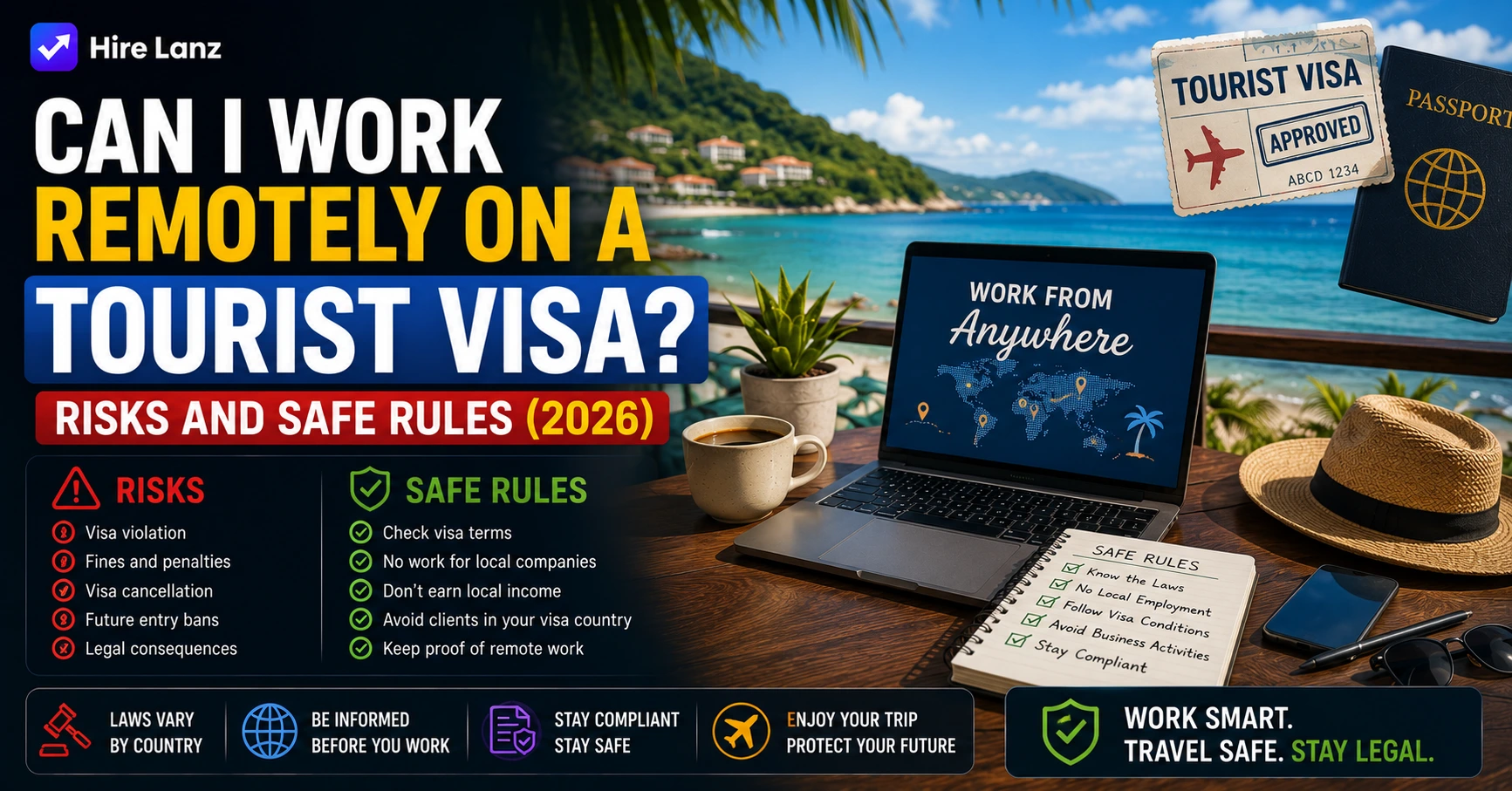
- Explicitly allowed: New Zealand (unlimited), United Kingdom (incidental only)
- Grey but usually tolerated: Schengen countries, Mexico, Georgia, much of Latin America
- Clearly prohibited: United States, Australia, Japan, Singapore
- Golden rule: never take money from a client or employer inside the country you are visiting
Why 2026 Changed the Game for Remote Workers
For years the grey zone worked because nobody was counting. Stamps were smudged, records were manual, and a few extra weeks in Europe rarely surfaced. That era has ended.
On 10 April 2026 the European Union’s Entry/Exit System became fully operational at every external border crossing across all 29 Schengen countries. It records facial images, fingerprints and document data automatically, making the 90/180 rule genuinely enforceable for the first time.
That rule catches people constantly, because the window rolls. Non EU visitors get 90 days in any rolling 180 day period across the whole area combined, not 90 days per country, and a weekend outside resets nothing.
Asia has tightened too. Thailand’s Cabinet approved cutting the 60 day visa exemption for most nationalities, and immigration now flags repeat entries with no clear purpose. Endless border runs are fading fast.
What Happens If You Get Caught
Enforcement is inconsistent, which is what makes it dangerous. Thousands of people work remotely on a tourist visa every day without incident, so the risk feels theoretical right up until the moment it is not.
The usual trigger is not a raid. It is an officer scanning your travel history, noticing you have spent nine of the last twelve months in the country, and asking what you do all day.
Consequences run from refused entry to cancelled visas, fines, deportation and multi year re-entry bans. Bali has run repeated crackdowns on permit breaches, and “everybody does it” has never worked as a defence.
The longest lasting damage is paperwork. An immigration violation follows you into future applications, including skilled worker and residency routes, and you will be asked to declare it for years afterwards.
- Immediate: refused entry, cancelled visa, fines
- Short term: deportation at your own expense, a flagged passport
- Long term: re-entry bans that can run for several years
- Career: a declared violation weakens future work visa and residency applications
A valid visa or an approved ESTA is not a guarantee of entry. Admission is decided at the border, and an officer who concludes your real purpose is to work can refuse you regardless of what your paperwork says.
The Tax Trap Most People Miss
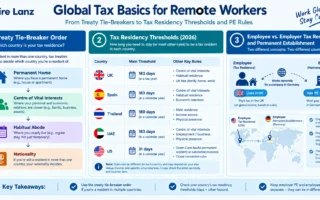
Immigration is only half the problem. Working remotely on a tourist visa can also make you tax resident, and that clock runs separately from anything your visa says. In most countries the threshold sits at roughly 183 days in a twelve month period.
Cross it and the host country may tax income you assumed was purely a home country matter. Your own country will still expect a return, so you can end up inside two systems at once.
Sensible exceptions exist. New Zealand indicates you may owe no local tax if your income is taxed elsewhere and you stay under 92 days in twelve months, or up to 183 days where a tax treaty applies.
There is also a risk that is not yours at all. Work from one country long enough and your employer can be treated as having a taxable presence there, known as permanent establishment. That is why most HR teams cap overseas work at two to four weeks a year.
The Legal Route: Digital Nomad Visas
If you want the freedom without the gamble, this is the answer. More than 40 countries now run a visa or residence permit built for people earning foreign income, often with lighter paperwork than a standard work permit.
Thailand’s Destination Thailand Visa, launched in July 2024, is the flagship. It runs five years, allows 180 days per entry with an extension available, and asks for roughly 500,000 baht in savings held for three months. Thai clients remain off limits.
Europe is well covered. Portugal’s D8, Spain’s digital nomad visa, Italy’s route and Croatia’s permit all target remote workers, with monthly income thresholds broadly between 2,500 and 4,500 euros. Croatia exempts foreign income from local tax while the permit lasts.
Elsewhere the bar is lower than people expect. Colombia asks for around 750 dollars a month and Brazil around 1,500, while Japan’s six month route sits at the strict end with a 10 million yen annual income requirement.
- Check the income floor first, since it disqualifies most applicants
- Season your savings early, because embassies often want funds held for three to six months
- Get an employer letter stating in writing that you may work remotely
- Buy compliant health insurance, which nearly every programme requires
- Apply from outside the country, as in country conversion is being closed off in several places
If you’re planning anything beyond incidental work, confirm your specific position with an immigration attorney before you travel. This article is not legal advice.
Summary
Working remotely on a tourist visa is legal in a small number of countries, tolerated in many and prohibited in some of the biggest destinations. The law covers what you do, not who pays you, so a foreign employer is not the shield most travellers think it is. Enforcement has tightened, with biometric border tracking now live across Schengen, and tax residency adds a second risk at around 183 days. For short holidays the exposure is low. For anything longer, a digital nomad visa is the clean answer.
Frequently Asked Questions
Can I answer work emails on a tourist visa?
In practice, yes, almost everywhere. Brief contact with your job, such as replying to messages or joining one call, is not treated as employment. The problem starts when your laptop is open most of the working week.
Can I work remotely on a tourist visa in the United States?
No. The US has no digital nomad visa, and the State Department is clear that B-1 and B-2 visitor status does not permit employment, even for a company abroad. Unauthorised work can also damage future green card applications.
Does a two week trip really count as working?
Length does not override your visa conditions, so a short trip is not automatically compliant. It is simply less likely to attract attention, and in countries that permit incidental remote work it usually falls inside the rules.
Will a digital nomad visa let me take local clients?
Almost never. These programmes exist to bring in foreign income without competing for local jobs, so clients or employers inside the host country normally need a separate work permit.
How do I check the rules for my destination?
Read the official immigration site for that country rather than a blog, including this one, and check the permitted activities for visitors. Rules changed in several major countries during 2024, 2025 and 2026, so older advice is unreliable.
Conclusion
So, can I work remotely on a tourist visa? Only where the country has said yes in writing, and only inside the limits it sets. The safe approach is simple. Keep short trips short and your work incidental, never earn from a business inside the country you are visiting, count your days, and apply for a proper remote work visa the moment a trip turns into a stay. That decision removes the fines, the bans and the anxious border queues, and costs far less than getting it wrong.
Related Articles:
Can I Work for a US Company From Home Without a Visa? (2026) Legal or Risky?
Portugal D8 Digital Nomad Visa Requirements 2026: Avoid Delays